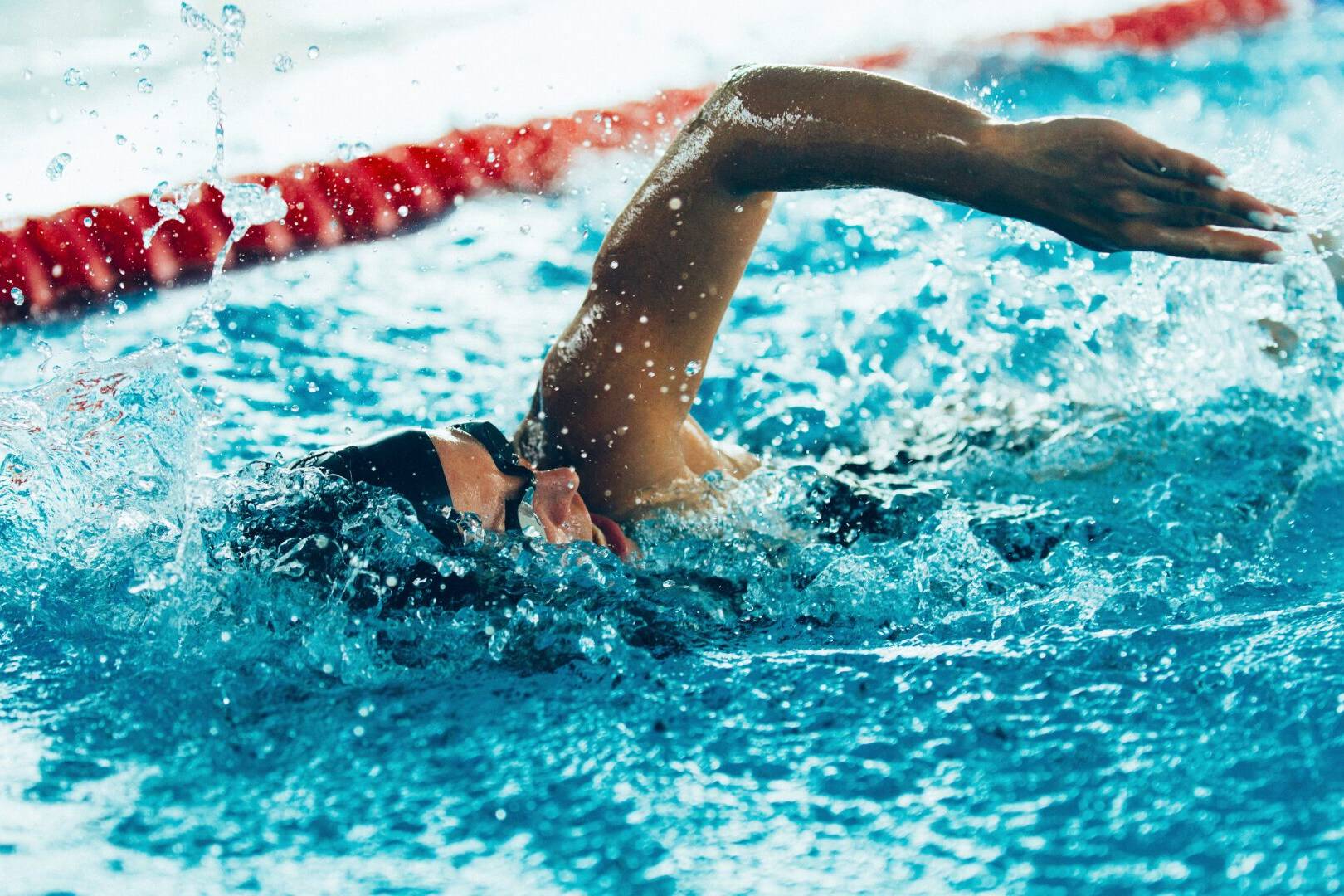
Swimming Workouts for Muscle Gains
Swimming is commonly considered a cardiovascular workout that challenges your heart and lungs as you travel the length of the pool racking up laps, but thinking of swimming workouts as only cardio sells the exercise short. If you’re looking to build strength while in the water, keep reading for the ultimate swimming workout for those muscle gains.
Why Swimming Improves Strength
When you travel through water, every movement you make works against the natural resistance of the water. Each push, pull, kick, and stroke requires you to displace the water around your body. Pushing water out of the way as you swim enhances your muscular endurance,1 but it also means you can plan your workout routines to maximize the resistance training effect of swimming. You can use tools and a combination of laps and pool-based bodyweight exercises to develop your strength further.
There are many ways to incorporate strength work into your swimming routine. Here are a few suggestions to get you started, but you can get creative as you develop your own swimming workouts for muscle gain.
Lap Swimming Workout
To gain strength with a workout that uses only lap swimming, you’ll need to focus on the workout’s intensity, resistance, and program design.2 Rob Jackson, a personal trainer, nutrition coach, and Ironman Athlete suggests using swimming paddles, such as Speedo’s Power Paddles, to create more resistance with each stroke. More resistance requires more strength to pull your way through the water, adding that your form really matters. You need to make sure the large lat muscles of your back are doing most of the work. If you feel your shoulders aching before your back, you’re swimming with poor form. Make sure you’re pulling through the water with your back rather than pushing with your shoulder.
Bodyweight and Cardio Pool Workout
A good format for swimming workouts for strength training is to mix in cardio with bodyweight exercises,” says Kyra Young, a personal trainer and owner of Red Pear Life. According to Young, this format helps keep workouts interesting, breaking up the monotony of continuous lap swimming.
If you don’t have access to a Push Plate, you can perform the same exercises using a kickboard, although the Push Plate makes these exercises a little more manageable with well-placed handles and a less-buoyant design. Kickboards, by contrast, are harder to hold on to and keep submerged.
Backstroke (1 Lap)
If you’re not a strong swimmer, hug a kickboard to your chest for added buoyancy. Focus on your kick rather than the entire stroke.
Jump Squats (20 Reps)
- Stand in waist-deep water with your feet slightly wider than shoulder-width apart.
- While keeping your weight on your heels, press your hips back and squat until your shoulders are submerged.
- Then press forcefully through your feet and jump into the air as high as you can.
- When you land, continue the exercise.
Seal Jacks (20 Reps)
- Stand in shoulder-deep water with your feet together, your arms extended directly in front of your chest at shoulder height, and palms facing in.
- Jump both feet out laterally as you simultaneously open your arms wide to the sides, landing in a star-like position.
- Immediately reverse the movement, jumping your feet back to the center as you draw your arms together in front of your chest.
- Continue the jumping motion as fast as you can.
Wall Pushups (20 Reps)
- Stand in waist- to shoulder-deep water, facing the side of the pool.
- Place your hands on the wall or the pool edge, with your palms aligned with your shoulders and your elbows extended.
- Keeping your body straight, bend your elbows, and lower your chest toward the wall.
- When your elbows are bent at 90-degrees, reverse the movement and extend your elbows
“Fake Ropes” (20 Jumps)
- Stand in waist- to shoulder-deep water with your feet hip-distance apart, elbows bent, and hands to the sides (as if you were holding a jump rope).
- Mimic a jump rope movement for 20 jumps, hopping up and down as you rotate your forearms and wrists.
Front Raises with Push Plate (10 to 20 Reps)
- Stand with your feet shoulder-distance apart in shoulder-deep water holding the handles of the Push Plate in both hands.
- Extend your arms directly in front of your chest with the Push Plate platform parallel to the ground.
- Engage your core and keep your torso straight while pressing your arms straight down through the water until your arms are at your sides and the Push Plate is in front of your thighs.
- Reverse the movement and pull the Push Plate back through the water to the starting position.
Flutter Kicks at Pool Edge (100 Reps)
Hold onto the edge of the pool, arms straight and elbows locked. Lift your legs behind you and flutter kick them as fast and hard as you can for 100 repetitions. Young suggests completing three to five sets of the entire circuit, depending on your fitness level (which should take 45 to 60 minutes). “By alternating exercises, you can keep moving, intensifying the workout while burning more calories and building strength.
Water Jogging (1 Lap)
Jog back and forth across the pool. If your pool has shallow and deep water and you don’t feel comfortable jogging in deep water, swim, or doggy paddle across the deep end.
Source: Very Well Fit