Designing for Privacy Around the Pool
How living walls, trellises, hedges, pool houses, and architectural screens create a private, welcoming pool environment without sacrificing light or beauty. Privacy has become one of the defining priorities in modern backyard and pool design. As homes are built closer together and outdoor living expands into true year-round use, homeowners want spaces that feel calm, cocooned, and visually protected yet still bright, open, and connected to nature. From layered hedges and sculptural screens to horticentric green walls, today’s privacy strategies are far more sophisticated than simply adding a fence. They form a key part of the pool experience, influencing microclimate, comfort, and overall ambiance.
This design shift reflects the broader evolution of luxury poolscapes. In Luxury Pools + Outdoor Living’s recent on-demand panel, outdoor design leaders explored how pools are now integrated into holistic environments meant to be enjoyed in every season. As they explained, privacy is no longer a finishing detail, it is a foundational design element that shapes how a space looks, feels, and functions.

Privacy as Part of a Year-Round Pool Environment
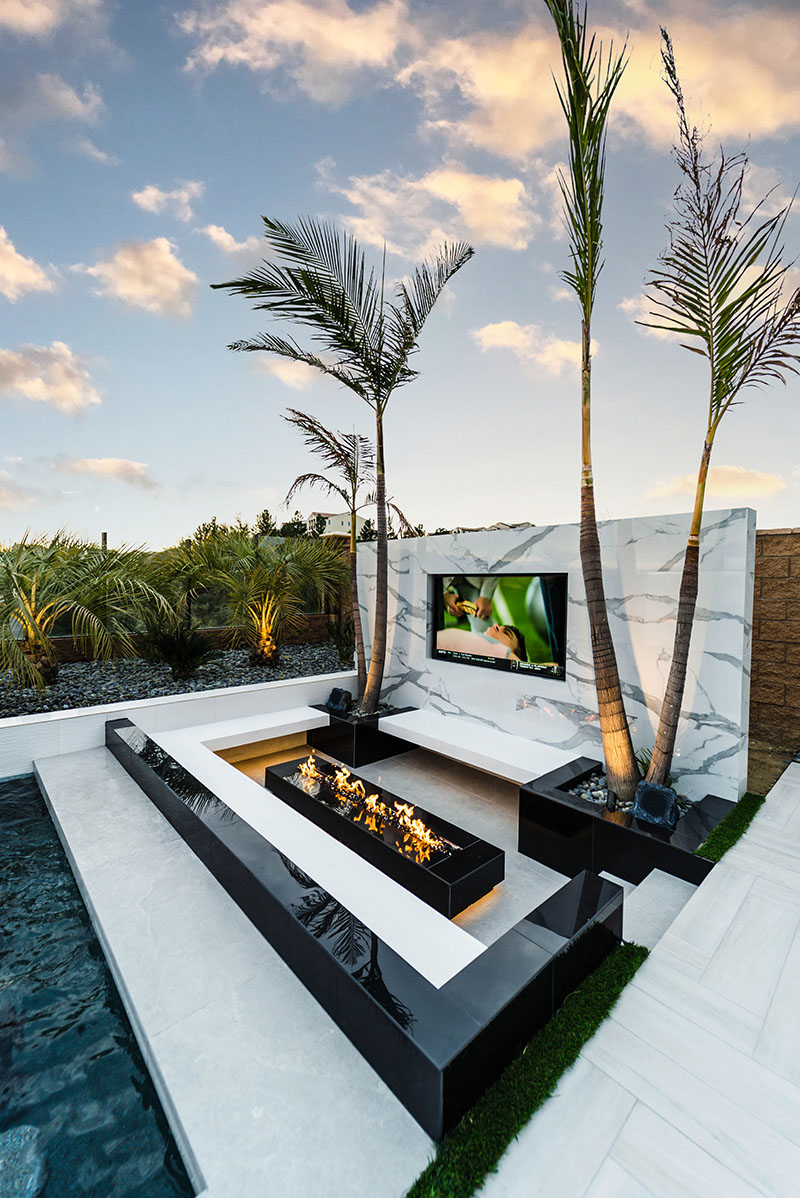
Today’s modern pool is not just a warm-weather amenity. As homeowners seek outdoor living experiences that support gathering, wellness, dining, and quiet retreat in all seasons, they rely on privacy solutions that contribute to comfort and usability. From wind protection to sound buffering, privacy features now serve multiple roles in shaping microclimates.
As noted during the panel discussion, the most successful environments consider far more than the pool itself. Sun angles, sightlines, wind patterns, plant life, and architectural alignment all influence privacy and enclosure. By planning these elements in unison, designers create outdoor rooms that feel intentionally framed and protected without becoming dark or enclosed.
This approach is especially important as homeowners embrace year-round use of their pools and surrounding outdoor spaces. Integrated overhangs, planted screens, and strategically placed structures help ensure these areas remain comfortable well beyond the summer months.
Architectural Screens and Trellises
Architectural privacy screens have become one of the most stylish ways to block neighboring views around the pool. Materials like wood slats, metal panels, and composite louvers offer visual protection while still allowing air and light to circulate. These screens can be used as standalone partitions or incorporated into pergolas, cabanas, or pavilions.
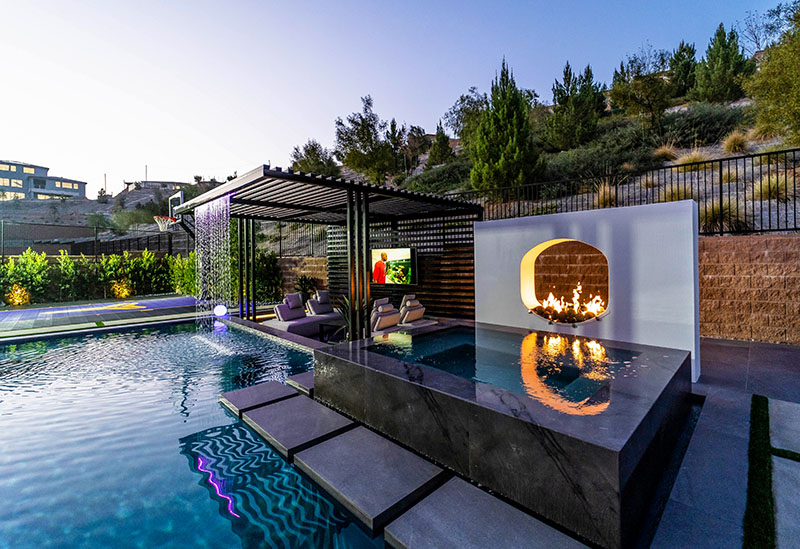
Nick Fuentes, CEO of Westmod, highlighted the growing influence of programmable louvered structures in shaping privacy and comfort. These systems allow homeowners to control airflow, shelter, and sunlight with precision throughout the year. “By responding to changing weather conditions,” Fuentes noted, “they transform terraces and pavilions into adaptable living spaces that maintain comfort in various climates.” When combined with integrated lighting, heaters, or smart controls, these architectural frameworks become both functional and visually striking privacy solutions.
Trellises offer a softer variation on the architectural screen. By supporting vines such as jasmine, climbing roses, or native clematis, a trellis becomes a living veil—filtering views, adding fragrance, and gently shading the pool deck.
Green Walls, Hedges, and Horticentric Screening
Plant-driven privacy has become one of the strongest design movements in luxury outdoor living. The rise of horticentric design—an approach that positions horticulture as an architectural element—has reshaped how privacy is achieved around pools. Instead of using plants as decorative borders, designers craft layered planting compositions that serve as natural walls.
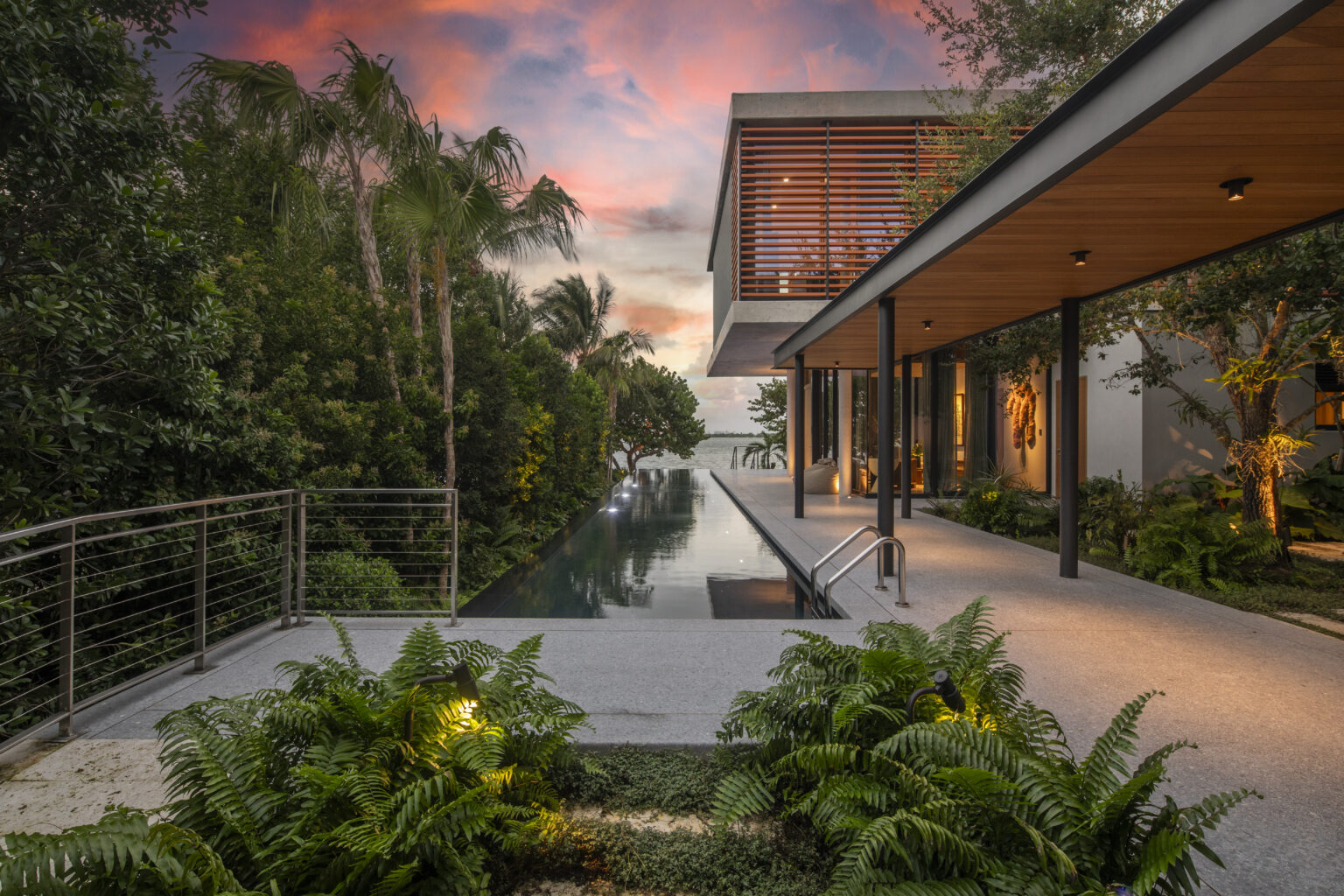
Nick Fobes, PLA, of Hoerr Schaudt, explains that this mindset aligns with a “choose green over gray” philosophy, reducing unnecessary hardscape and prioritizing plantings that deliver both beauty and performance. By integrating shade trees, evergreen hedges, tall grasses, and sculptural shrubs, designers create privacy screens that also manage heat, control glare, filter stormwater, and soften sound.
These living boundaries foster a sense of immersion and tranquility. Pools recessed into landscaped terraces feel sheltered by nature, while spa zones framed by foliage offer the ambiance of a private retreat. Green walls—whether modular living-wall systems, vine-covered frameworks, or layered plantings—allow even compact yards to achieve lush enclosure without losing sunlight.
Fences That Complement the Landscape
While fences remain a common privacy solution, today’s designs lean toward subtlety and integration. Horizontal wood slats, composite planks, and aluminum panels are tailored to match the home’s architecture and surrounding plant palette. Designers are opting for warm, natural tones and elegant profiles that blend into the background, allowing the pool and landscape to take center stage.
To prevent the space from feeling compressed, fences are often softened with layered plantings, uplighting, or adjacent screening structures. This ties the fence into the overall design rather than treating it as a standalone boundary.
The Role of Structures in Creating Enclosure
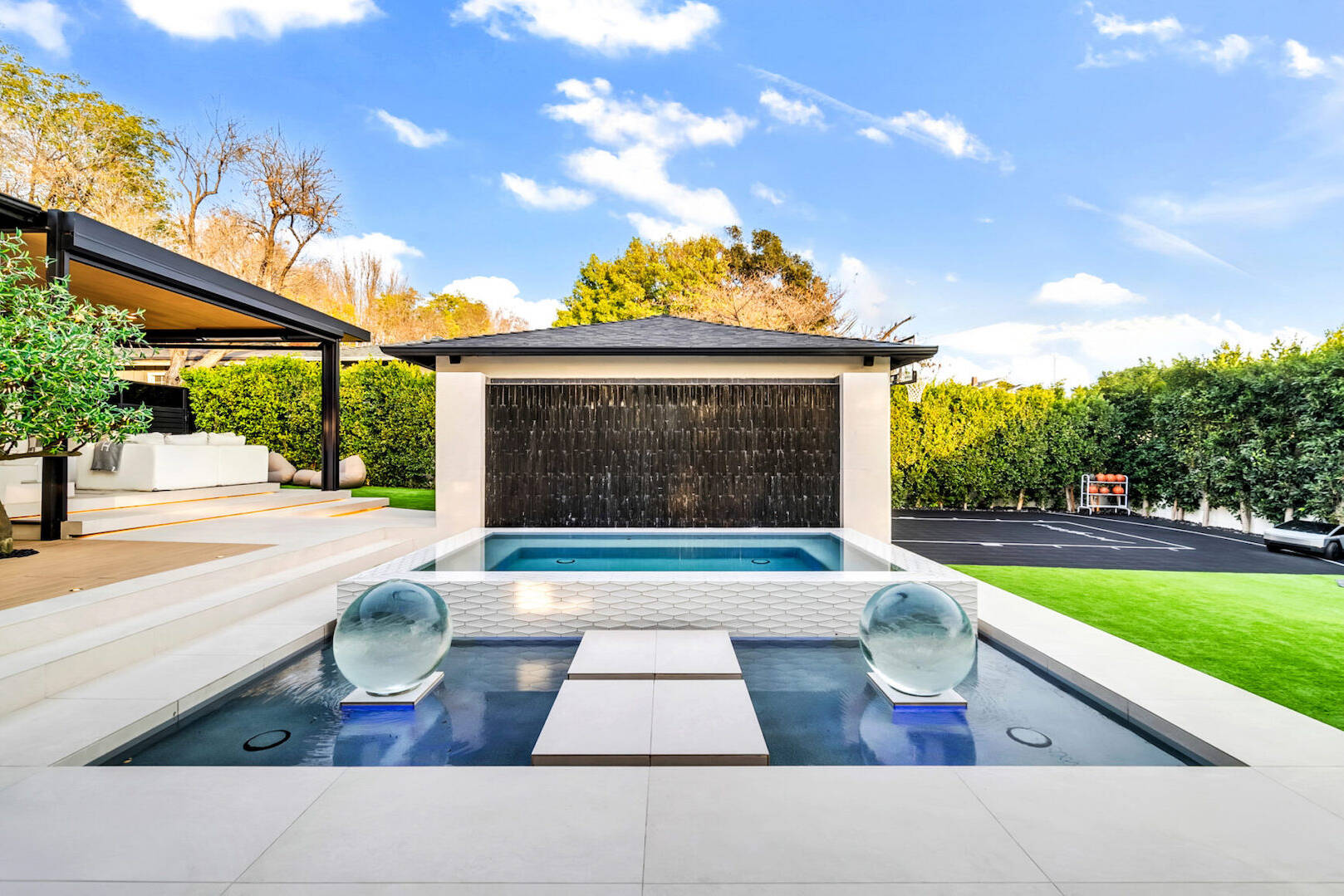
In many high-end projects, poolhouses and pavilions contribute significantly to privacy. Fully enclosed poolhouses—now one of the fastest-rising trends—serve as architectural anchors that naturally block lines of sight. They provide a protected interior for year-round use while shaping circulation and creating private pockets around terraces and water features.
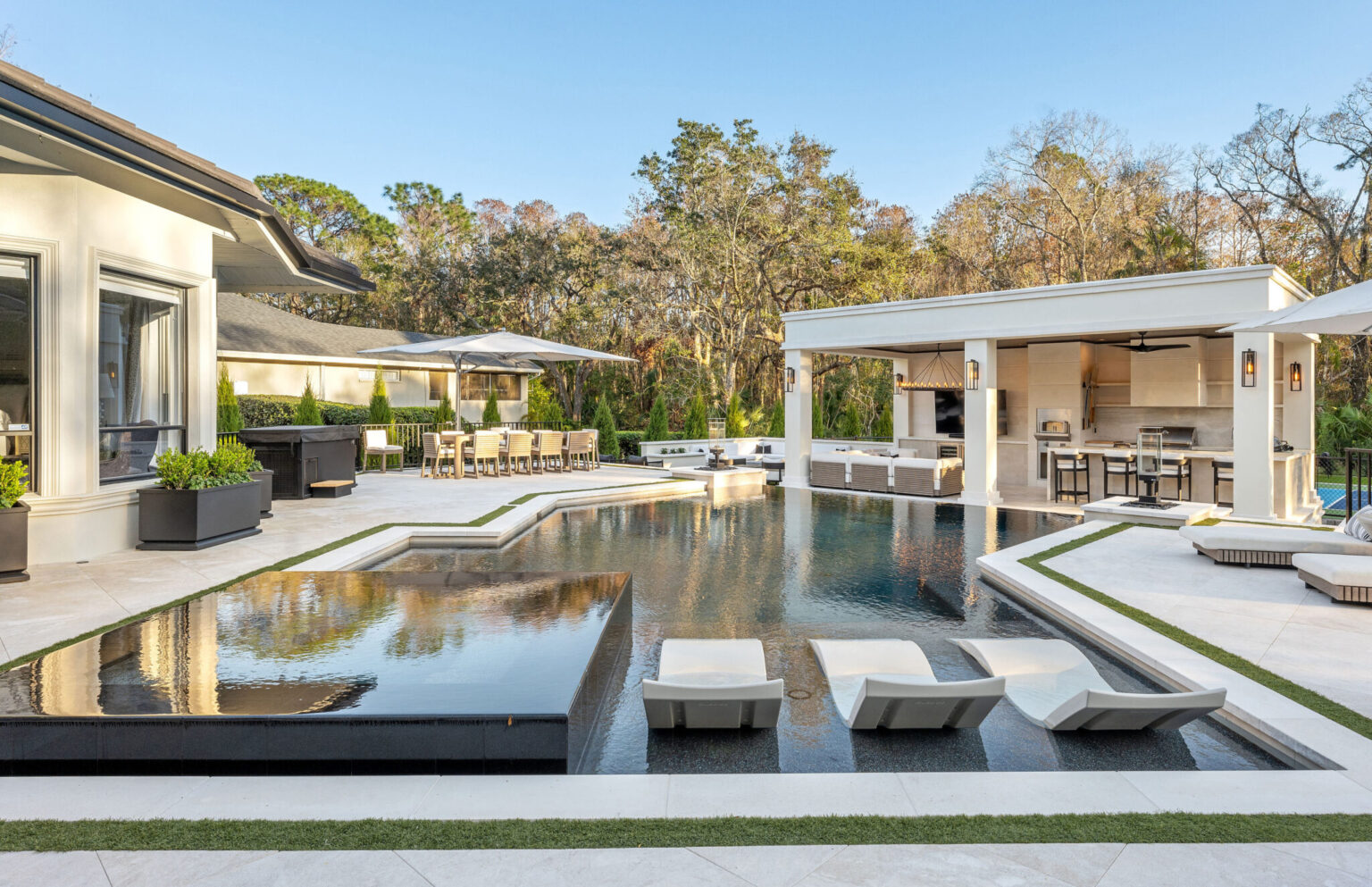
Ryan Hughes, president and creative director of Ryan Hughes Design, described the poolhouse as “the new anchor of the outdoor environment,” noting how it brings “architecture, landscape, and lifestyle together in a way that lets clients enjoy their pool with comfort and intention every single day of the year.” These structures not only extend the home but also create sheltered spaces that feel intimate and contained, forming natural privacy zones along the pool deck.
Privacy as an Element of Wellness
Privacy around the pool is deeply connected to wellness. As homeowners use their outdoor spaces for restoration, movement, and quiet contemplation, they want environments that offer refuge from noise and visual distraction. Living walls muffle sound, hedges soften edges, and green screens create a sense of sanctuary. Even functional elements like retaining walls or mechanical equipment can be concealed behind plantings or decorative panels to preserve a peaceful atmosphere.
This merging of privacy and wellness aligns with the broader trend toward fully connected outdoor living experiences. Pools now link seamlessly to dining terraces, fire features, gardens, and pavilions, forming an immersive environment where boundaries feel natural rather than imposed.
The Bottom Line
Designing for privacy around the pool is no longer about building the tallest fence. It’s about creating a layered, elegant, and nature-integrated environment that feels protected yet open. Through thoughtful combinations of architectural screens, programmable structures, trellises, hedges, and horticentric green walls, homeowners can surround their pool with beauty, comfort, and year-round usability.
By blending architecture, plant life, and technology, today’s privacy solutions do far more than shield views—they enrich the entire outdoor experience. This holistic approach reflects the new standard of luxury living: connected, intentional, and deeply attuned to the rhythms of nature and everyday life.
Source: LuxuryPools